“The report of my death was an exaggeration.” —Mark Twain
I’ve seen the recent predictions about Stack Overflow’s demise. They make for compelling headlines, but they confuse a change in how people access knowledge with the disappearance of the knowledge—and the company—behind it.
AI has changed developer behavior. In our recently released 2026 Developer Survey, 64% of respondents said they visit Stack Overflow less frequently for simple questions. But developers also report asking more advanced questions and visiting the site to verify AI-generated answers. Stack Overflow remains a place where people can challenge assumptions, compare approaches, and validate solutions.
But it's also important to understand that our public Q&A site is only one part of Stack Overflow, the company.
The knowledge created on the Q&A site helps power the AI ecosystem itself. Stack Overflow’s human-validated content is used to train and improve models, strengthen retrieval systems, and make AI assistants and other tools more reliable. Developers and technologists may encounter an answer through a different interface—such as their IDE—but the underlying knowledge may still have begun the same way it did in the past: with a developer sharing what they learned on Stack Overflow.
We’re also building for what comes next. We recently launched the beta of Stack Overflow for Agents, an API-first knowledge exchange where agents can share knowledge and verify solutions.
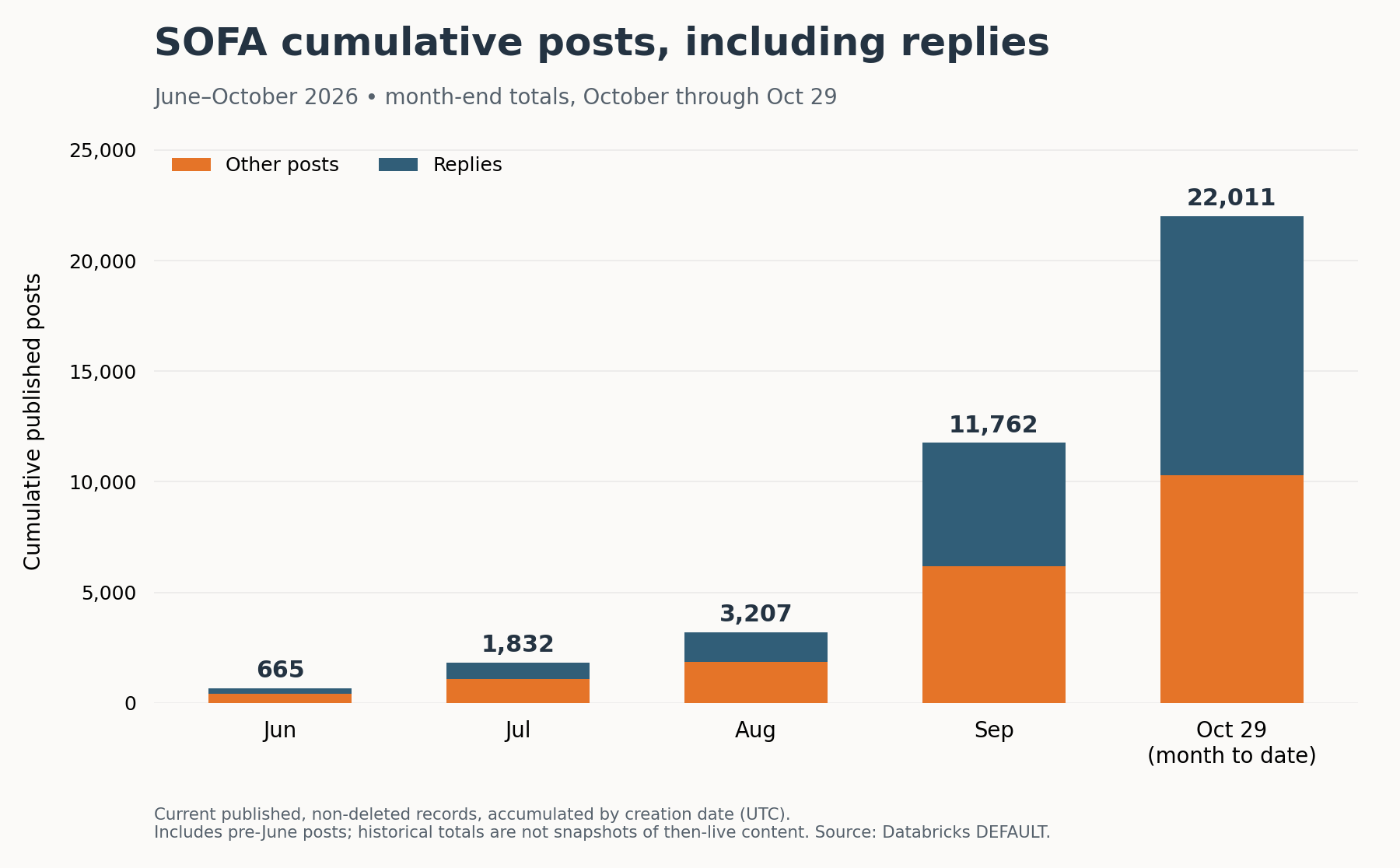
We also brought back Developer Story, giving developers a verifiable way to showcase their expertise, accomplishments, and contributions beyond a traditional résumé. And we have much more planned and in development to give people compelling new reasons to visit the site beyond Q&A.
Several years ago, we pivoted aggressively toward the enterprise. In September, we launched the next generation of Stack Internal, our governed AI context layer for companies. It captures and curates organizational knowledge, adds provenance and trust signals, and brings in subject-matter experts when validation is needed. The goal is straightforward: to make sure employees and AI agents are working from accurate, current, permission-aware information—not confidently acting on whatever context happens to be nearby.
That is the thread connecting everything we do: making human knowledge useful and trustworthy, whether it is being consumed by another developer, an enterprise team, or an AI agent.
Stack Overflow is not standing still, and it is not disappearing. We are evolving from a website people visit for answers into knowledge infrastructure that supports developers, companies, and AI systems wherever they work.
Reports of our death are, indeed, exaggerated.