In June, I wrote to announce that Prosus, one of the world’s leading technology operators and investors, had agreed to acquire Stack Overflow. Today, I’m pleased to say that the deal has been finalized. This is a tremendous milestone for our company and community, a testament to the hard work and dedication that have built Stack Overflow over the last 13+ years.
We’re excited to continue working towards our existing goals and priorities with no changes to our focus on creating and maintaining a vibrant community and our core SaaS business model. With Prosus, we can accelerate plans and be even more ambitious about scaling our public and private platforms.
Over the last quarter, we revisited our mission statement to reflect our unwavering commitment to knowledge sharing and consolidated the many versions that have surfaced over the last several years into one:
Empower the world to develop technology
through collective knowledge.
We, and Prosus, understand that our commitment to spreading knowledge and building community is the engine of our success. Democratizing information is the only way to empower learners to develop the future of technology. We hope to further invest in the community so an even wider group can benefit from it - technologists in countries around the world who are all on their unique learning journeys.
Public Platform and Community
Q2 was a time of strong growth for our public platform. We saw more new accounts being created than ever, with April, May, and June trending at or above our highest levels from last year. Part of the credit here certainly goes to our public platform and community teams, which continue to push improvements to the user experience and work to ensure our sites are becoming more welcoming, inclusive, and diverse. But there are also macro trends at work.
As we join Prosus’s edtech portfolio, we do so alongside companies like Udemy, Brainly, and Codecademy. The number of people around the globe seeking careers as software developers is increasing. So too is the number of professions, from finance to life sciences to climate studies, where writing code is not the primary task, but is fundamental in transforming those professions to become more automated and to drive innovation.
As our community grows, we must continue to invest in supporting it. As I’ve outlined to all our employees, keeping the community at our center is a core value. We’re pleased to announce that we’ve recently hired a new VP of community, Philippe Beaudette. Philippe has a storied career, beginning in the days of AOL chat rooms, through the early days of Wikipedia, and most recently at Reddit. He brings a great wealth of experience in building safe, inclusive communities where users feel empowered to express their curiosity and share their knowledge. We’re thrilled that Philippe, with his deep community background, will be hyper focused on working closely with the community to help make the Stack Exchange ecosystem even more vibrant. You can read his blog post on our upcoming roadmap and listen to a podcast interview with him below.
Speaking of hiring, we have over 100 open roles across our company. If you want to be part of a high growth organization that works to accomplish a powerful mission at global scale, take a look and see if there is an opportunity available that speaks to you.
“We want to communicate through the work that we’re doing and not create more meetings, more time spent figuring out where to look or who to ask. Stack Overflow for Teams plays a big role in InnerSource because it helps us document all these answers that are needed for engineers to move quicker. Stack Overflow helps on unblocking engineers, and that's a big thing we didn't use to have.”
Rocio Montes, Staff Software Engineer, Intuit
Product
Q2 saw the launch of a new product, Collectives™ on Stack Overflow, which aims to increase value for our users, community, and clients by organizing Q&A and Articles around a certain technical topic, for example a programming language or cloud services platform. We had two great customers come onboard to help us launch this product: Google Cloud and Google’s Go Language, and we will be announcing many more Collectives in coming months. Our approach to development is product-led AND community-driven. By learning from and serving our community, we can be a force multiplier for companies that want to empower users of their technology.
The two Collectives we’ve launched for Google Cloud and GOLang are reaching hundreds of millions of Stack Overflow users.
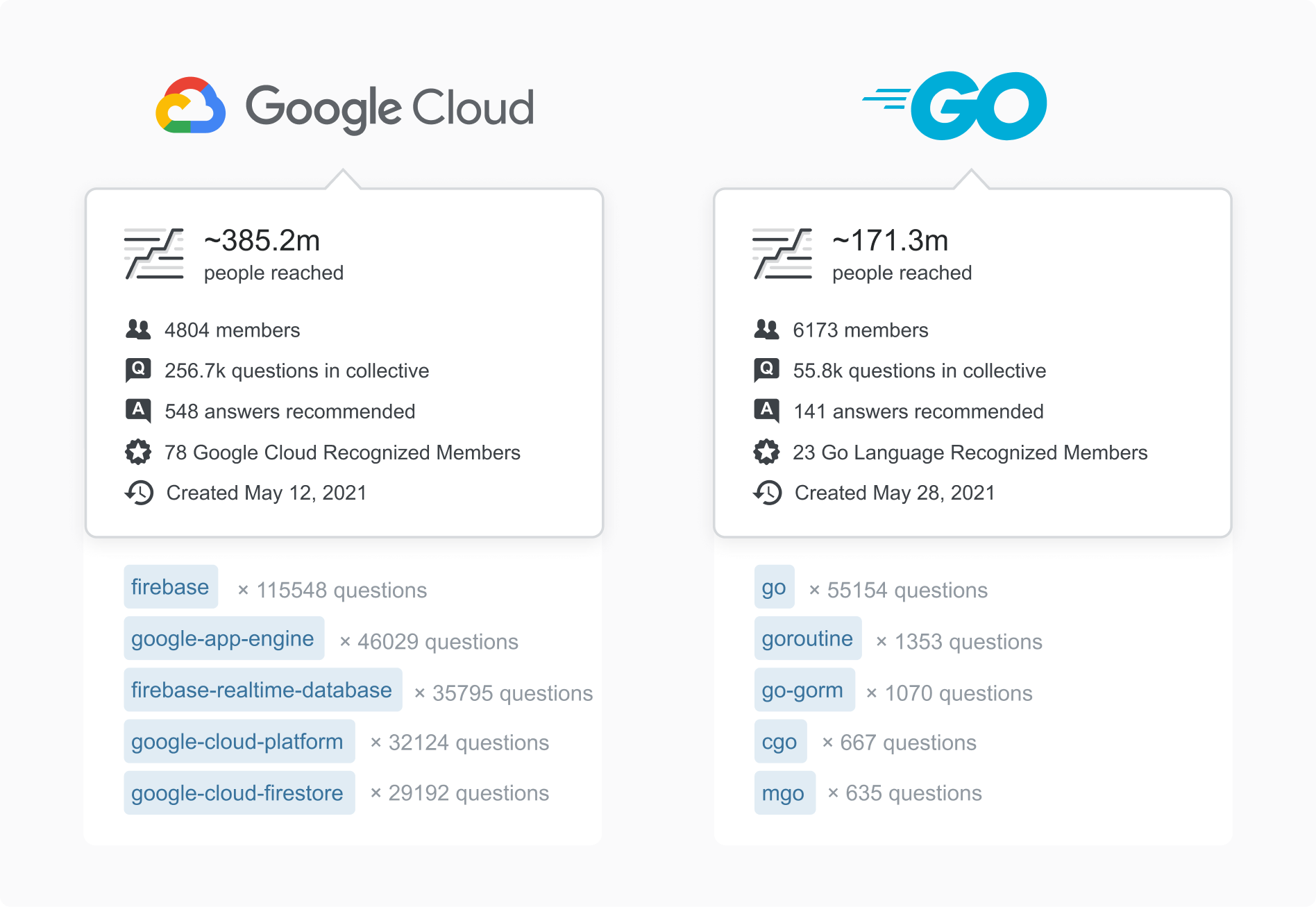
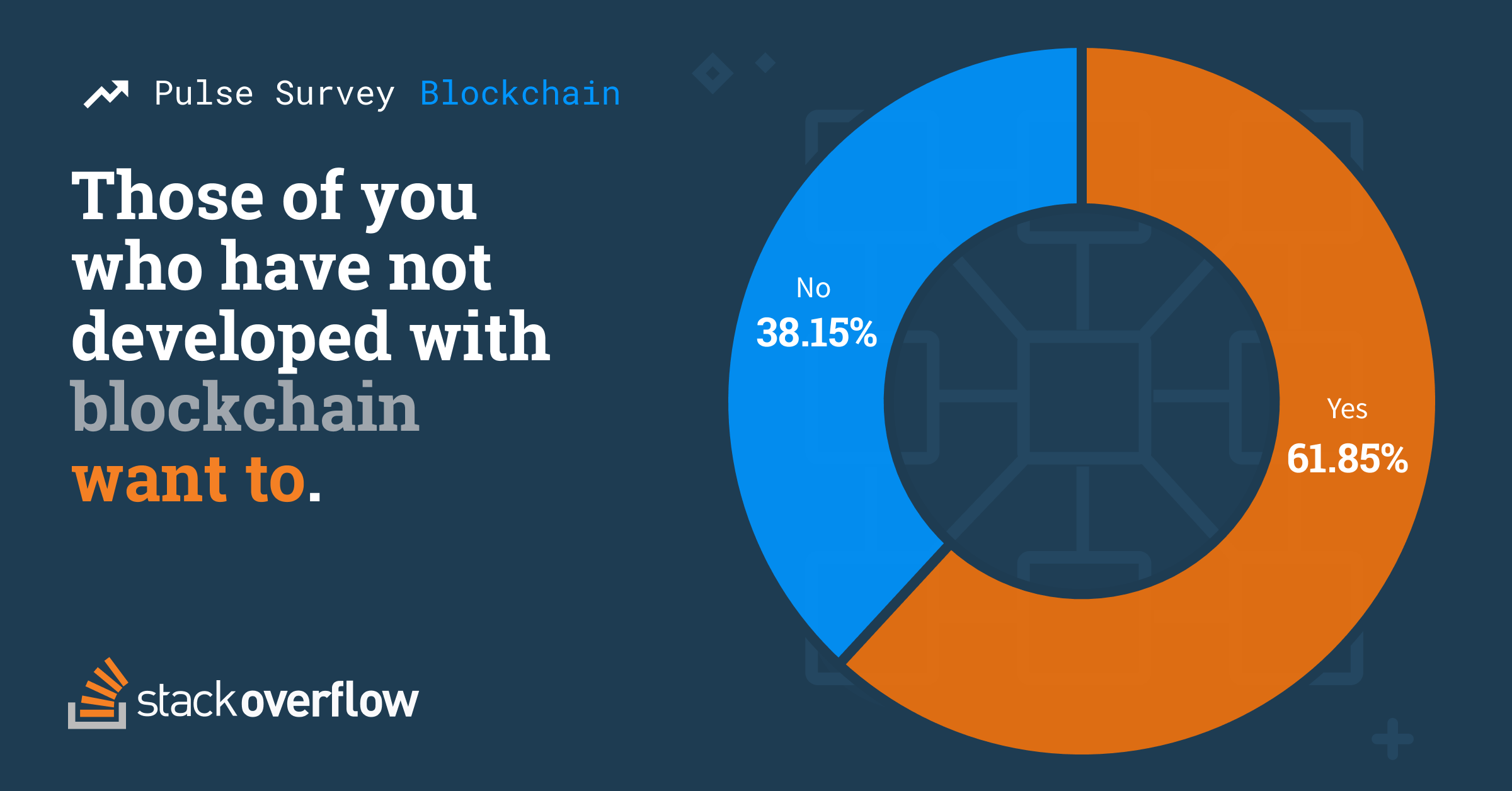
We’re excited for this new approach to organizing knowledge and community on Stack Overflow, and have already seen over 10,000 users sign up to follow our Collectives. I believe that Collectives will help our community to organize and share knowledge around clusters of technology, for example the wide array of development happening in the blockchain space. We recently ran a survey on this topic, and got some fascinating results. There are Stack Exchanges focused on Bitcoin, Ethereum, Cardano, Iota, EOS.IO, Tezos, and Monero. I’m sure more will emerge as this space continues to grow.
Collectives is part of our Reach and Relevance product offerings, and we’ve had an incredible start to this line of business in 2021. Earlier this year we combined our Advertising and Talent products under one umbrella. We moved away from discrete hiring to focus more on advertising and brand awareness. We are seeing tremendous traction in this space, with firms like AWS, JP Morgan Chase, and Accenture coming on board for brand awareness campaigns.
Just as there are an ever growing number of new users signing up for the public platform, there is a steady increase in the number of organizations that want to reach developers. Some are looking to hire great talent, others want developers to try their product, and others simply want developers to use their platform, tools, or ecosystem. We can help them do it all, and we do it while respecting developer’s privacy and avoiding invasive tracking.
As I’ve written before, Predictable and Reliable Financial Performance is one of our strategic priorities. In Q2 we introduced another new product, sponsored podcasts, and our content marketing business is on track to more than double in size over last year. Put together, Advertising and Collectives delivered an exceptional quarter, the biggest in the company’s history.
“The number of daily searches stood out as a healthy sign of people changing their behavior and coming to Stack Overflow for answers. Anecdotal evidence showed that even at this early stage, many actually found what they were looking for and therefore gained value without actively participating. Even the SMEs, who had to put in some extra effort up front, reported noticeable time savings, specifically when a ’hot topic’ had a good SO answer they could just point people to instead of repeating the answer on Slack”
Tzach Zohar, System Architect, Skai
Q2 also saw continued traction towards our other strategic priority for 2021: Product-led Transformation. After our launch of our Freemium Teams tier in Q1, we saw a steady stream of thousands signups and users trying out the Teams product. From storied innovators like Xerox to rising unicorns like Doctlib, we continue to see an ever growing cohort of organizations leveraging Stack Overflow for Teams in a range of use cases to ultimately innovate faster through knowledge sharing and collaboration.
One key metric we focus on as we evaluate how our users see value in our Teams product is something we call Knowledge Reuse. While the number of questions and answers added to a Team are meaningful, we believe the true value is best quantified by understanding how often users are able to quickly find a solution to the problem at hand. On our public site, we note how many people a particular user has reached with their answers. It’s incredible to realize that the contributions of an individual can help tens, even hundreds of millions of others learn and grow.
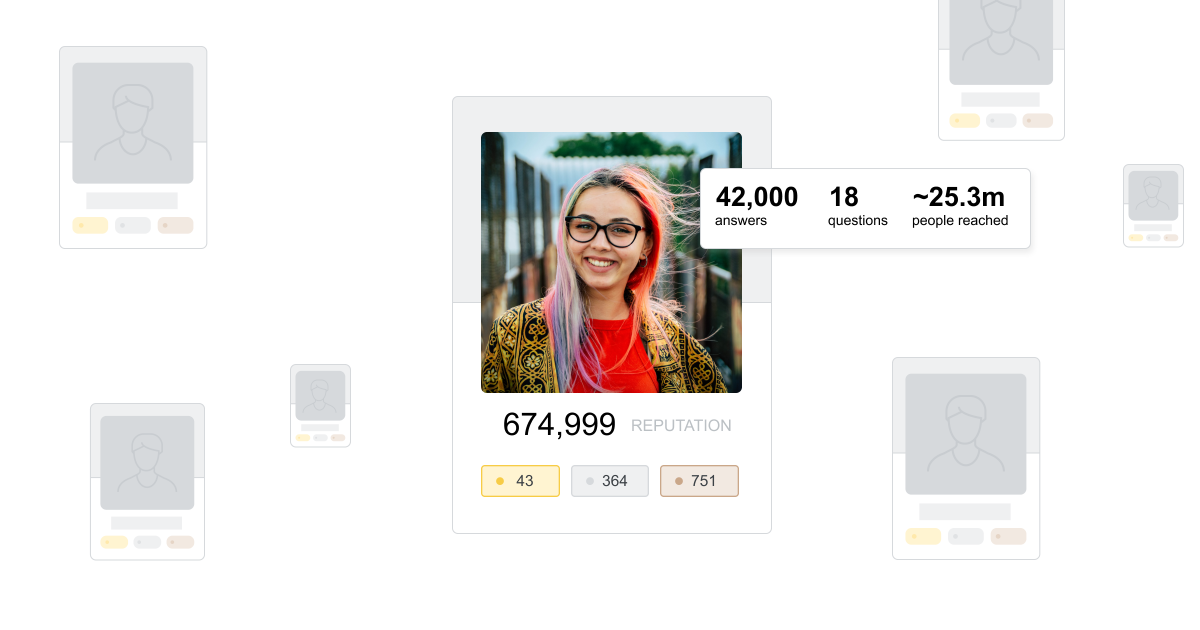
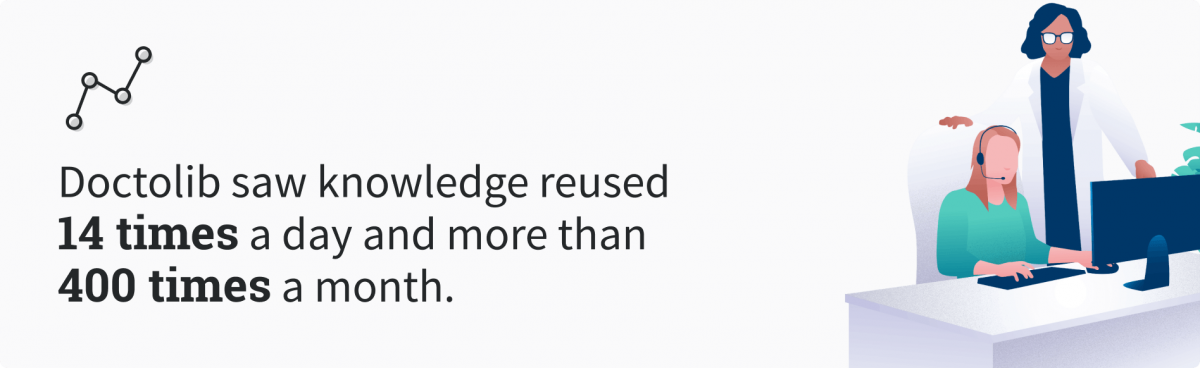
The same outsized impact happens within private Teams. At companies like Xerox, Doctolib, and Unqork, knowledge is reused hundreds of times a month. That’s hundreds of emails or chat messages avoided, time saved for the person asking the question and for their colleagues.
One of our most viewed questions on Stack Overflow is a question that asks “What is a NullPointerException, and how do I fix it?” That was asked 12 years and 7 months ago. It has 31 different answers or solutions provided. That question has been viewed 3.2 million times. That's 3.2 millions times that knowledge was reused. We have one piece of knowledge on our own internal instance that's had more than 1,000 views in the past two years - How do I submit a Salesforce Case?
Another major impact Teams can have is to break down silos within an organization. Great solutions may not come from the teammate or department you expect. We continue to use Teams internally, where it helps us learn, share, and grow. There are great conversations happening across legal, marketing, sales, product, and engineering. Wisetech Global tells us that at their company all hands, Stack Overflow for Teams has been used to help discuss and debate the best ways to implement some of the company’s core mantras and values. “We have recently been running a program where we're taking a number of the mantras that we hold dear in the business and we've been amplifying that to the global audience,” explains Ian Larsen, GM of software operations. “We've been using Stack Overflow for Teams as a discussion forum. It’s a place for people to raise questions, get additional clarity, or just discuss the nuances. So I think that has been great.”
“We have a highly complex and proprietary tech stack and have recently expanded rapidly. Our senior engineers were spending a lot of their very valuable time answering the same questions to different people. Having our own Stack Overflow (for Teams) setup means they only have to answer it once and can provide code samples, details descriptions etc. It also has the benefit of this knowledge being available outside of our time-zone's working hours so our engineers in the US and Asia can get quick, detailed answers without having to wait until our UK office opens. It has significantly helped boost our productivity”
Global Cyber Security Provider
Diversity & Inclusion
A year ago I made a commitment to include updates on our diversity and inclusion progress in these quarterly posts. We are making a significant investment in DEI (diversity, equity and inclusion) at the company. We are compiling and preparing to share DEI metrics with employees, evolving our hiring practices, rolling out inclusion training to all employees, and we are in the process of hiring a Director of DEI to lead these efforts. We’ve also committed to a quarterly DEI newsletter compiled by our growing number of affinity groups collectively, which is launching this week.
Over the last three months, we’ve also hosted panels featuring employees and external experts open to the full company on issues and experiences facing our Asian & Pacific Islander community and our LGBTQIA+ community. Hearing shared and individual experiences was eye opening, and I truly believe learning about others’ experiences makes us a stronger, more thoughtful organization in the long run.
There is so much work to be done, but we’re continuing to take steps towards a diverse and inclusive culture that we believe sets the tone for the community we foster online.
Conclusion
As we look out to the second half of 2021, there are many big opportunities we are considering. How can we leverage the global scale of Prosus to expand our business and bring a broader cohort of users, from around the world, onto our public platform? How do we enable beginner developers to leverage Stack Overflow so they become engaged participants, not just casual visitors? What kind of strategic partnerships and alliances are possible with other edtech companies, leveraging our scale and their expertise so that Stack Overflow can offer a wider variety of options for finding solutions and learning new skills?
The completion of our deal with Prosus isn’t the only exciting news I get to share today. Today we published our annual Developer Survey. It contains many fascinating insights, but one in particular stood out to me. For the rising cohort of coders under the age of 18, online resources like videos, websites, and blogs are more popular than books and school combined, a statistic that doesn't hold for any of our other age cohorts. Overall the developer profession is full of new joiners, with more than 50% indicating they have been coding for less than a decade, and more than 35% having less than five years in the trade.
So much of what drives us is the desire to empower this new generation of developers and technologists. The resources available to us through this acquisition and the continued growth of our product and public platform give me great confidence that we will continue to unlock new potential, and that we will grow Stack Overflow into an enduring global brand with a vibrant community that continues to empower the world to develop technology through collective knowledge.
TRANSCRIPT
Philippe Beaudette The thing that I love about this corner of the internet is this altruistic bent of just like giving away what you know. And deep down at the heart, it really is kind of an amazing thing that people do to just spend the time, the hours that they spend curating the websites, whether it's Wikipedia, or Stack Overflow, or Reddit, and really like giving what they know to the world in general.
[intro music]
Ben Popper Cockroach DB is the only bug you'll ever love, because it's the only one you don't have to worry about. As a low touch SQL database that automatically handles scale, operations and uptime, Cockroach DB lets you focus on developing. Get your free cluster and a free t shirt at cockroachlabs.com/StackOverflow.
BP Hello everybody. Welcome to the Stack Overflow Podcast, a place to talk about all things, software and technology and today all things software, technology and community. I am Ben Popper, Director of Content here at Stack Overflow. And I am joined today by my colleague, Ryan Donovan. Hi, Ryan.
Ryan Donovan Hey, Ben, how you doing today?
BP I'm well. So for folks who don't know, Ryan is a great technical writer and editor manages our blog and our newsletter, and we work together closely on the content team. Ryan, Stack Overflow is probably one of the largest online community, certainly the largest in the world of software development. But you know, it's not the only sort of community in it's vain. And actually, it's interesting sometimes when I try to describe what is Stack Overflow to people who aren't familiar with software development, I say, it's like, Wikipedia meets Reddit. It's like you could start a community about anything a Stack Exchange, but they really care about objectivity. So it's not just Reddit where you can just have fun, you know, just posting for the lulz. But it's not Wikipedia, where it's like based on an article it's like centered around certain topics, interests and knowledge communities. So we have a great guest today, Philippe Beaudette, who has joined us on the trust and safety team as part of our overall community organization. And he has some incredible experience across a wide range of some of the biggest communities on the internet. So Philippe, welcome to the show.
PB Thanks. Thanks for having me today. I appreciate it.
BP Philippe, I also just wanted to say congratulations, you were recently promoted to our new VP of Community. So yeah, big congrats on that.
PB Thank you very much. I appreciate it. It's a, it's quite an opportunity. And I couldn't be more excited about the challenges and the opportunities we see ahead.
BP Yeah, and gives us some great continuity with our podcast, Sara Chipps was my co host for a while she was in that same role. And so yeah, I'm excited to see what you do. There's so many big challenges and big opportunities with a huge online community. And I think there's a lot of potential here. So let's dive into it. So for folks who don't know, just Yeah, tell them real quick who you are, and sort of how you got into this world and a little bit of your CV, so they kind of understand where you're coming from.
PB Sure. It's, you know, it's it's fortuitous that you mentioned Wikipedia and read it because that's two of the places I've worked. I was at Wikipedia for about six and a half years and various roles from heading up the strategy project to being the director of the legal and community advocacy team. So I did a whole lot of stuff there, head of reader relations, all sorts of fun things at the Wikimedia Foundation, which is the nonprofit that supports Wikipedia and its sister projects like Wiki Data, Wiktionary, things like that. I was also Director of Community at Reddit for a while. And I've been doing community work on the internet's for more years than I care to admit, probably about 20 years now, starting with some time I spent at AOL, back when we were still mailing out discs in the mail. So, you know, I, I had enough of those to paper a small room.
BP Yeah, let's take it back there. Because actually, it's interesting. our CTO, CPO, Teresa Dietrich is also an AOL alum. At that point in time, it was one of the biggest online service providers and people needed AOL essentially, like you could get online. But if you wanted to get online with an easy sort of accessible portal on your mail was there and the news was there, if you didn't want to sort of figure it out, and you know, if you if you didn't have the chops to figure it out, AOL was one of the ones that would let you log in all you to do is take their free hours on the CD and then start paying by the hour after that, what kind of communities do they have, how large are they and what what did you do, you know, to sort of help manage those?
PB So I worked on the Community Action Team at AOL, which was responsible primarily for enforcing our Terms of Use. We'd if you were going to start a chat room that existed to cause problems for other people. We were the ones who shut you down. Were the ones that came in and gagged you when you got out of control. And we worked closely with the community guides, who were volunteers, in a certain assuring that AOL stayed a positive and mostly family friendly place. So we also took all the reports that people sent us in and, you know, we really, we did a whole lot of everything, but the largest part of it was sitting there looking at lists of private rooms that people created and deciding whether or not they should or should not exist on our site.
RD Yeah, that early internet felt like kind of a wild west at least, you know, my side of it. I wonder what that looked like at AOL, like was it as wild as it felt outside of AOL?
PB Yes, it really was. And in fact, we were still figuring out at the time, like, how to do internet, you know, how do you internet? So when we began, when we started blocking accounts at AOL, in order to get unblocked, you had to write a letter, snail mail, as you put in the mail and mail to Virginia, and somebody would read it and decide whether you were appropriately apologetic for what happened with your account. And if so we'd reactivate your account. Eventually, that went to an online process. But yeah, I mean, in the beginning, we're still dependent on things like snail mail that manage our processes.
RD Somebody's AOL account is locked, they can't get on the internet. Right?
PB Exactly. We eventually built some ways around that, where you get access just enough to request to be unblocked. And but you know, I can't tell you how many times we got to explain to somebody what their kid had done on their AOL account, which was always fun. And that they needed to write a hard letter to tell us that they wanted to be back on.
BP I guess, yeah, that was a community that anybody could create within sort of AOL, or some of them may, you know, have gotten to a significant scale. But let's move to sort of the second layer here, which is time at a place like Wikipedia, or Reddit, or Stack Overflow, sort of that that next generation where things reached a new kind of global scale, and became the central source of either community or knowledge in a way that hadn't before I remember reading a New Yorker article, who knows way, way back when about Wikipedia, that was just sort of talking about all the time and effort that had gone in over the millennia to create encyclopedias and libraries. And, you know, all the people on staff at Britannica who, you know, did this, and along comes the internet and community and people are whipping up an encyclopedia that is starting to compete with and now is, you know, sort of the de facto source for truth. So how did you arrive at Wikipedia? And when you did, where was it in that, in its development?
PB So it was kind of the early days of Wikipedia, it wasn't the very earliest, but I would say I was in the second major wave of contributors. And I found it because I was lying at home one day, sitting on my bed board. And I happened to Google for the name of the governor of Oklahoma, just because that's where I lived at the time. And I found it, I found a Wikipedia article on it. And it had this button that said, 'you can edit this'. And I thought, well, that's pretty cool. I want to see how that works. Because at the time, nobody was doing that you couldn't just go edit a page on the on the internet. So I tried it out. And I kind of got a little bit hooked. And then I started to dig into the behind the scenes processes, and realize that there was this whole community of people building this thing. I was I was hooked, I was on Wikipedia, and for the first for the first edit I made. And in the process of that they put out a call for somebody to help with a strategic plan. And I volunteered. And Sue Gardner, who was the executive director at the time, decided that for whatever reason, she wanted to give me a shot at it. So I came in, I spent a year helping Wikipedia write a strategic plan with my friend Eugene Kim, who ran the project as a whole. And we did this in a very wiki way, we threw up a wiki and had everybody come and tell us what they thought the plan should look like. Because let's face it, if you put like 10 guys in a boardroom and had them write a strategic plan for Wikipedia, it would never go, they would never extend it. So I did that. And at the end of that process, they were crazy enough to give me a permanent gig as head of reader relations. And then my whole role there was to represent the voice of the consumers of Wikipedia's content, the readers. That eventually emerged and we did different things. I helped run the fundraiser one year, we raised $16 million in record time, something like that. And eventually, I ended up with a team of folks who were handling basically everything weird. Internally, we referred to my desk is the pile of crazy. And it really was, you never knew what we were gonna see.
RD Do you have a favorite piece of crazy that came across your desk?
PB Oh, man, I have several. I always love the ones where they would send us product reviews, I got pictures of a microwave once from somebody who was telling us how great the microwave was, well, that's awesome but I don't make microwaves. It was not unusual for us to get things about, like collectors guns that people had bought. And they wanted to figure out what the provenance of this gun was. And you know, as much as I may love watching Antiques Roadshow, that that's not what we do, either. And then they would write to us about social issues, the gay penguins in New York City, in Central Park, who were being separated, people were up in arms about it, we for some reason, they felt like it was important to read Wikipedia with that sort of thing. And we read all the mail, you know?
BP You become the central source of truth and knowledge. You know, you're sort of, you're sort of a deity like figure, you know, they're just gonna reach out. 'Hey, can you help us with this?'
RD Yeah. I mean, that just shows the sort of centrality of Wikipedia on the internet. I remember when we first talked you were talking about the whole SOPA thing.
PB Yeah. When back in the day when SOPA was a concern, for those who don't know Stop Online Piracy Act and Protecting the Internet Act. We at Wikipedia and the folks that read it, and the folks at stack got together and decided we were going to work with some other players on the internet and blackouts are major websites for a day. This was a major decision for Wikipedia. We were dealing with engineers who spent their lives making sure that websites stayed on and now all of a sudden we're asking them to block it out and do it on very short notice. And in order to to even see if this is something we want to get involved with, we had to poll the Wikipedia community on this, and then determine what the parameters were. Do we blackout just in the US? Do we go worldwide? So we ran this long conversation that I led, that had 1000s of people giving us input on this. And for several days at a time, all I did was hit refresh on the keyboard, and just see what was new. And it ended up that the Wikipedia community felt very strongly that they did want to protest this that they did want to take part in, they wanted to blackout the sites worldwide. And we did and our fantastic graphics folks put together some amazing graphics around the theme of imagine a world without free knowledge. And the end result was great. We got what we wanted. We were driving people to call their Congressman, and we got a call from the Capitol switchboard. Basically asking us to turn it off, because we were melting the phone lines down. So that was awesome. That was a really great feeling. Then the next day, I picked up the New York Times, and there we are on the front page. And I thought, I have died. We have made it. This is amazing. And it was the day that like the internet flexed its political muscle, and the first time we really got things accomplished. It was fun to be a part of that. Yeah.
BP So you had mentioned that the edit button was kind of what got you into Wikipedia and you know, set you down that path. But one day, you also tried to get a little fancy with the CSS, you want to tell us that story?
PB Yeah, this is the day I made it impossible for a few seconds to edit Wikipedia. I was, I mentioned before I ran the fundraiser one year and I wanted to do something fancy with the the pages with that you could donate on and on one particular page, I wanted to remove all the extraneous interface elements so that your choices were like donate or cancel. That's it. Thinking that you know, the fewer rabbit holes, you had to go down from that page, the more we more likely would get to be converted. I'm not that great at CSS, it turns out, in fact, I'm pretty bad at it. And rather than removing it for just those pages, I took that off the whole site. And that included the edit button. Now the problem was to do this, you had to edit a CSS page. And to undo it, you also had to edit that page. And I just took away the edit button. So for a few seconds until somebody, a great developer named Ryan, remember that you could add a particular text string to the end of the URL, and it would fake the edit button we could go in and we could revert out the history. For a few seconds there, you couldn't edit Wikipedia and you didn't have any interface elements. Because I'm bad at CSS.
RD I guess that's why you managed community and not front end.
PB This is why I'm not an engineer. Yeah. [Ryan laughs]
BP And so I guess like yeah, from from your perspective, you know, I would love to hear two things. One is sort of like, what are the things you've learned that are true across all these disparate communities? You know, AOL, Wikipedia, Reddit, Stack Overflow? Are there certain things that hold true? You know, obviously, I'm sure there, there's experience you've gained along the way that useful. And then, you know, to what degree are they different, they have either a different sort of kernel or seed that you know, then creates sort of how people behave, or they have, you know, different community as a result of sort of serving different purposes, maybe, you know, having different tools. Do you think that you can reflect on those things and include Stack Overflow, in your time here in that?
PB I bet I can. So one of the things that I love about this corner of the internet that Stack Overflow lives in, and I would replace Reddit and Wikipedia in the same corner of the internet, this broadly, knowledge sharing, user generated content area. In fact, I was telling somebody yesterday, I think if you put together a Venn diagram of the contributors of Stack Overflow, and Reddit and Wikipedia, you'd get a nearly one to one relationship. But the thing that I love about this corner of this, the internet is this altruistic bent of just like giving away what you know. And deep down at the heart, it really is kind of an amazing thing that people do to just spend the time, the hours that they spend curating the websites, whether it's Wikipedia, or Stack Overflow, or Reddit, and really like giving what they know, to the world in general. AOL was a little different, heavily commercial, obviously. But it was a necessary precursor to these sites that we've got today. We had to get people on ramp somehow. But, you know, I think that I've discovered that I love this, this little altruistic corner of the internet. It's a fun place to be. And it's particularly fun to watch the evolution that's happened from when I started till now, but to answer your questions at its core, it's still a beautiful thing to watch people give freely of their time and their knowledge and change these websites. Now, that's not to say that it doesn't have its problems. Obviously, there are people who are trying to create problems for some of us on the trust and safety team where I work since April, we've shut down about 700,000 people trying to create—or 700,000 accounts that were being created to spam. And you know, we didn't we didn't have that problem really on, on AOL is the technology hadn't gotten there yet. But here, that's, you know, that's part of the cost of doing business for us is we're going to have to have folks look for in combat, that sort of thing. Because anywhere you've got people giving something away for free, you're gonna have people trying to disrupt it. And that's, that's my job is to get into the middle of that and try and prevent that from happening.
RD I mean, I think this is sort of a fundamental property of the internet. And people in general, like people are very social, like this. This sort of comes out of the old news groups, and some of the bigger forums where people gathered together, researched, shared.
PB Yeah, I think a lot of our social norms also come out of those, those old news groups as well. And this, this sort of driving underlying concept of being kind to people, being welcoming all that started in those those news groups. When I was at Wikipedia, we compared one point in our history to the eternal September, that was famous in news groups were the day that it stopped feeling like new folks came in in September, they started feeling like they were always coming. And, you know, I think we take a lot of who we are culturally out of those news groups, and what the internet is and represents.
BP And so I guess, you know, one thing that has sort of come across to me is that Stack Overflow hasn't maybe had to deal with some of the challenges that you know, places like Reddit has, in part because it's relatively, you know, apolitical, it's focused, you know, often on objectivity and problem solving, you know, show your work, bring us a code sample. Can you talk a little bit about some of the stuff that you dealt with at Reddit? You know, it's it's fascinating, because not only is it as you said, you know, like building a community and giving to one another online, but now increasingly spilling over into the real world. So I think you mentioned, you know, you're very familiar with Pizza Gate, we'd love to hear about that. Because, you know, increasingly, the epistemic reality of the online community is forming what people's vision and belief in what's really happening. Whether or not that turns out to be true, is another story.
PB Yeah, I mean, it's interesting that, you know, as community managers at Reddit, my team and I, frequently, we're on the cutting edge of some of this meme based culture. And we saw pizza gate coming up pretty early in the process. And I'll admit it, the first time somebody brought me r/pizzagate to look at, I laughed, and I thought, there's no way this is a gate, this is not made it gate status. And I was wrong. And and fairly shortly after that, we had to shut it down. Because it was clear that this is becoming a community that had spiraled out of control and was going to do some real damage, both our reputation as a side but could theoretically hurt people. And as you recall, somebody did end up going into that pizza parlor in Virginia, I believe and shooting the place up.
RD I don't think he shot the place up, I think he walked in with a gun.
PB He walked in with a gun, you're right, he didn't actually shoot the place that you're right. But you know, that's, that's a scary reality. And so we took a lot of time to deliberate before we took any action on it in on any subreddit. And that one, rapidly, we saw, we were coming to a consensus that we had to do something. And finally, after a number of a number of meetings, I was walking down the street in San Francisco on the phone with somebody I just said, let's just shut it down, shut it down. This was kind of a new concept to Reddit in that like we didn't, we didn't really shut down heavily engaged big subreddits. At the time, we've done it on a few fatpeoplehate was a notable one that we'd gone in and shut down. And we took some some flack for that. But it was the right thing to do. Obviously, in retrospect, we absolutely did the right thing with pizzagate. And I almost wish we'd done it a little earlier, because that that thing was spiraling out of control that led to and was was informed by the folks over at the Donald, which later was also shut down. And at the time, we were making decisions about whether we even allowed the Donald to appear on the newsfeed at Reddit. And we eventually said, no, it's not gonna make it there. It's a toxic community,
BP You know, for the for the folks at Stack Overflow, who are part of the community and met in our power users, you know, maybe meeting you for the first time, what do you think, is a good way for our community to interact with, you know, sort of employees, you know, like, how can they bring you their concerns? How can they bring you their ideas, you know, what's a good way for us to facilitate that dialogue to ensure that what we continue building is something that they feel like they're a part of, and that they want to support?
PB Well keep engaging on meta, because that's, that's the place that is, is easiest for us to watch and for us to engage. But, you know, anytime you want to reach out to any of the staff, community managers, we're all happy to talk to you. And, you know, you'll see us most often around things like product launches, for instance, we launched Collective's last week, and you probably saw, if you were watching that at all, you probably saw me working closely with that team. So always feel free to send us a note, to find us wherever you can and give us feedback. We actually love it. We take that feedback, and we use it to inform our conversations with other teams, and we pass along your thoughts always, I guarantee. Anytime somebody takes the time to come to us and tell us about something it's because they feel strongly about it. We're gonna pay attention to that. I can always promise you we're going to do what you say, because we're trying to balance a number of different stakeholders but but we do give it a lot of weight and we take those comments back to the product teams or whomever it is that are building the thing and we make sure that they hear about it. So you know, do keep trying to engage on meta, do you keep trying to reach out to us we really do listen, sometimes I know it can seem like your voice is lost in the crowd. But it's not. We're reading every comment we're doing everything we can to to represent you back to the rest of the company.
[music]
BP Alright, well, I'm going to represent the community a little bit here if I can. We do this at the end of every episode, we shout out the winner of a lifeboat badge. Someone who came on and found a question with a score of negative three or less, gave an answer, they got a score of 20 or more. And the question now is a positive three. So awarded 19 hours ago to Arty-Chan. 'What is gitlab instance url, and how can i get it?' Alright, if you want to find out, you can find that in the show notes. I am Ben Popper, the director of content here at Stack Overflow. You can always find me on Twitter @BenPopper, email us podcast@StackOverflow.com. And if you liked the show, please do leave a rating and a review. It really helps. I'll popcorn it over to you Ryan, tell the folks who you are where you can be found.
RD Alright, I'm Ryan Donovan. I edit the blog here at Stack Overflow. I'm a ghost on Twitter @RThorDonovan. And you can email me at pitches@stackoverflow.com.
BP Alright. And Philippe, who are you? And if you want to be found on the internet, where should people look you up?
PB You can find me on Wikipedia at user Philippe. I'm on Reddit as AchievementUnlocked. And on StackOverflow just by name. You can find me by email at philippe@stackoverflow.com.
BP Alright everybody, thanks for coming on. And yeah, we'll talk to you again soon.
PB Thanks!
[outro music]