Building software

Production-grade LLMs and agents: a field guide
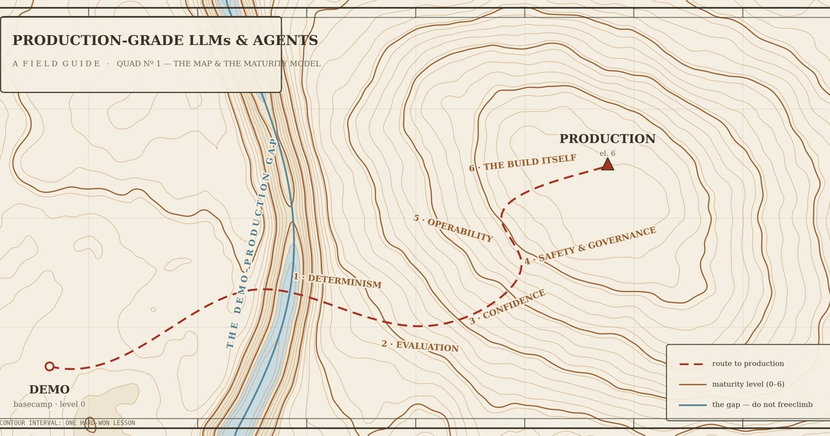
A maturity model for taking agents from an impressive demo to a system people can depend on — with a self-assessment and the map to a deep-dive on each layer.
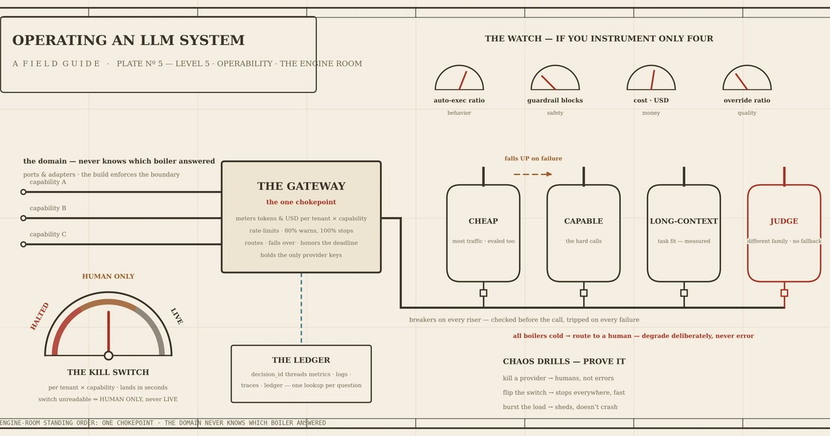
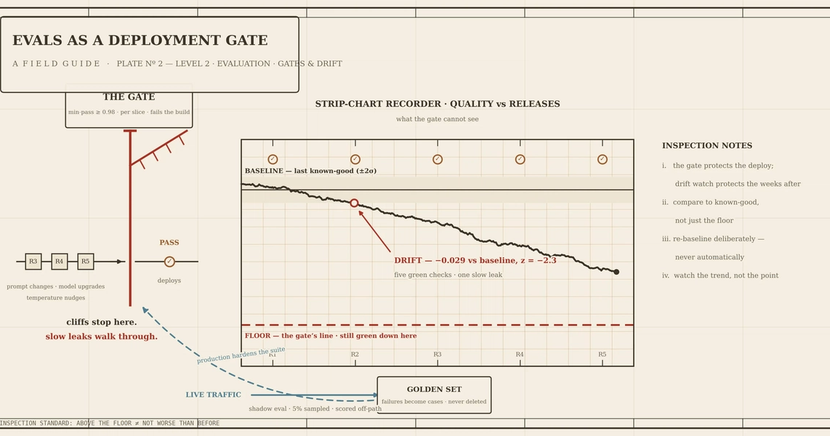
Part 5: Operating an LLM system: observability, cost, routing, and the platform underneath
Your service can be 100% up and still quietly approving the wrong things, burning its budget, or failing over into untested quality. Level 5 is the infrastructure that lets you see your decisions, bound your spend, route and fail over between models, kill bad behavior in seconds — and the platform that makes all of it possible.
A green exit code is not evidence that the work happened
Agents don't build trust for another reason, structurally worse than the first. It isn't only that the tool keeps changing shape. It's that the feedback loop you would need in order to learn the tool is broken at the point of measurement.


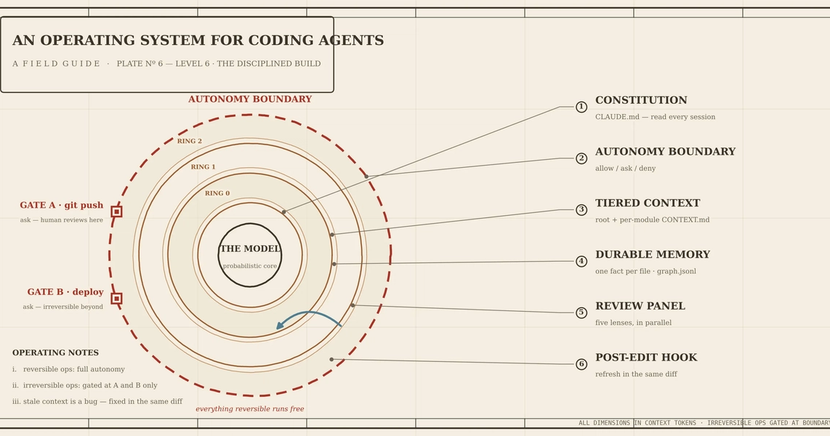
Part 6: An operating system for coding agents: the disciplined build
Coding agents are great for an afternoon and mediocre for a quarter. Here’s the small set of files and rules — with the actual configs — that keeps quality from decaying across months and thousands of edits, whether you run one agent or a fleet of them on the same repo.


Multiplayer AI: Why your team (and its agents) need a group chat
Ryan chats with the GM of Slack, Rob Seaman, about how their new Code Channels feature is bringing multiplayer AI to your team chats.


Java’s age is its AI superpower
Ryan welcomes Markus Eisele to the program to talk about why your coding agent should be writing Java.
Dispatches from O'Reilly: The right amount of spec for agentic development
When code gets cheap, the hard part is deciding what “correct” means and building a reliable way to check it.


Dispatches from O'Reilly: The best risk mitigation strategy in data? A single source of truth
Your semantic layer is a risk mitigation strategy. Not risk in the abstract, compliance-framework sense, but the practical, operational risk that quietly drains organizations every day.

Developers are attached to tools because tools encode trust
The tools themselves are new and their capabilities are in constant flux. If your kitchen knife kept changing shape, weight, and edge, you’d have to relearn it every time; that’s a hard tool to build trust in. But it also points to a flaw in how you use that tool, the process around it, and the way the tool reinforces the process.